The Complete Guide to SOTA Visual Arts Portfolio Preparation (2026)
A place at the School of the Arts (SOTA) is one of the most sought-after visual arts pathways in Singapore — and the portfolio is where most applications are won or lost. This guide walks through what SOTA looks for, what to put in the portfolio, how to prepare for the audition and interview, and when to start.
What the SOTA visual arts pathway actually is
SOTA admits students through its own talent-based selection rather than on academic results alone. For visual arts, that means showing genuine artistic ability and potential through a portfolio of work, usually followed by an on-site art task and an interview. It is a Direct School Admission (DSA) route, so a successful offer can secure a place before the PSLE.
What SOTA looks for in a portfolio
Selection panels are looking for more than neat drawings. The strongest portfolios tend to show three things clearly:
- Technical ability — confident observational drawing, control of line, tone, proportion and colour.
- Creativity and a personal voice — ideas that feel like the student's own, not copied references or formula pieces.
- Process and potential — evidence of how the student thinks, explores and improves, which signals room to grow.
Exact requirements are reviewed each year, so treat the list above as the underlying intent and confirm the current specifics on SOTA's admissions page before finalising anything.
What to include: building the portfolio
A well-rounded portfolio usually contains 8 to 12 pieces that show range rather than repetition. A practical mix looks like this:
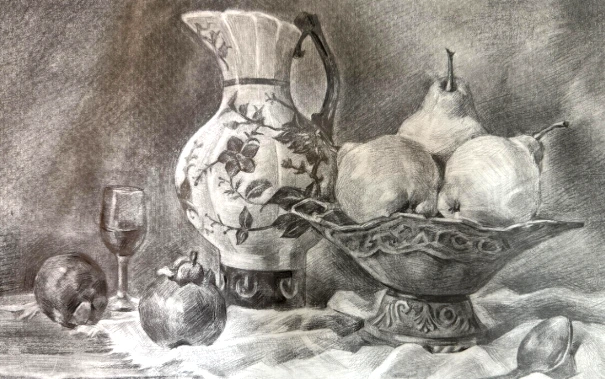
- Observational studies — drawing real objects, still life, or figures from life rather than photos where possible.
- Imaginative or thematic work — pieces that develop an idea, mood or story.
- At least one developed project — a single theme taken from first sketches through to a resolved final piece, ideally with the working pages kept.
- A variety of media — pencil, colour, paint or mixed media, to show adaptability.
Keep the sketchbook
A sketchbook or set of process pages is often as persuasive as the finished work, because it shows how a student observes, experiments and solves problems. Don't throw away the rough stages — they are evidence of thinking.
The on-site task and interview
Beyond the portfolio, applicants are typically asked to complete a practical task on the day and to talk about their work in an interview. Two things make the biggest difference here:
- Working under time pressure. Practise completing a piece from a brief within a set time, so the format feels familiar rather than alarming.
- Talking about the work. Students should be able to explain what a piece is about, what they tried, and what they would change. Confidence here comes from rehearsal, not luck.
At Coloury Art we run realistic mock auditions and interview practice so the real day feels like something the student has already done.
When to start
Because SOTA's window opens earlier than the central portal, and because a complete portfolio cannot be assembled in a few weeks, most families begin 6 to 12 months ahead. That runway is what allows a student to build range, develop one project properly, and practise the audition format without rushing. For the full month-by-month plan, see our DSA Visual Arts application timeline.
Common mistakes to avoid
- Starting too late. Preparing in the application month means the portfolio is rushed and thin.
- All finished pieces, no process. Hiding the sketchbook removes the evidence of how the student thinks.
- Copied references. Reproducing other people's images shows skill but not a personal voice.
- Sameness. Twelve similar drawings read as one idea repeated, not range.
- Ignoring the interview. A strong portfolio still needs a student who can talk about it.
SOTA 2026 — key facts at a glance
- Apply directly to SOTA, not via the central DSA-Sec Portal.
- SOTA's window opens earlier than the central portal (late March to early May in 2026).
- Aim for 8–12 varied pieces plus process work.
- Expect an on-site task and interview in addition to the portfolio.
- Start 6–12 months ahead. Always verify current dates on SOTA's and MOE's sites.
SOTA portfolio — quick questions
How many pieces should a SOTA visual arts portfolio have?
There's no fixed number, but a strong portfolio usually shows 8 to 12 of a student's best, most varied works — observational drawing, imaginative pieces, and at least one developed project with its process pages. Confirm current requirements on SOTA's official admissions page.
Do I apply to SOTA through the central DSA-Sec Portal?
No — for the School of the Arts you apply directly to the school through its own online application, which opens earlier than the central DSA-Sec Portal that other secondary schools use. Check SOTA's website for the current window each year.
When should my child start preparing a SOTA portfolio?
Most students begin 6 to 12 months before the application window, so there's time to build a complete, polished body of work without rushing. Earlier foundational art training helps, and we tailor preparation to the child's starting point.
 Chat with Us!